Preston Tower: a visit from Paul McLennan MSP, and a motion in the Scottish Parliament
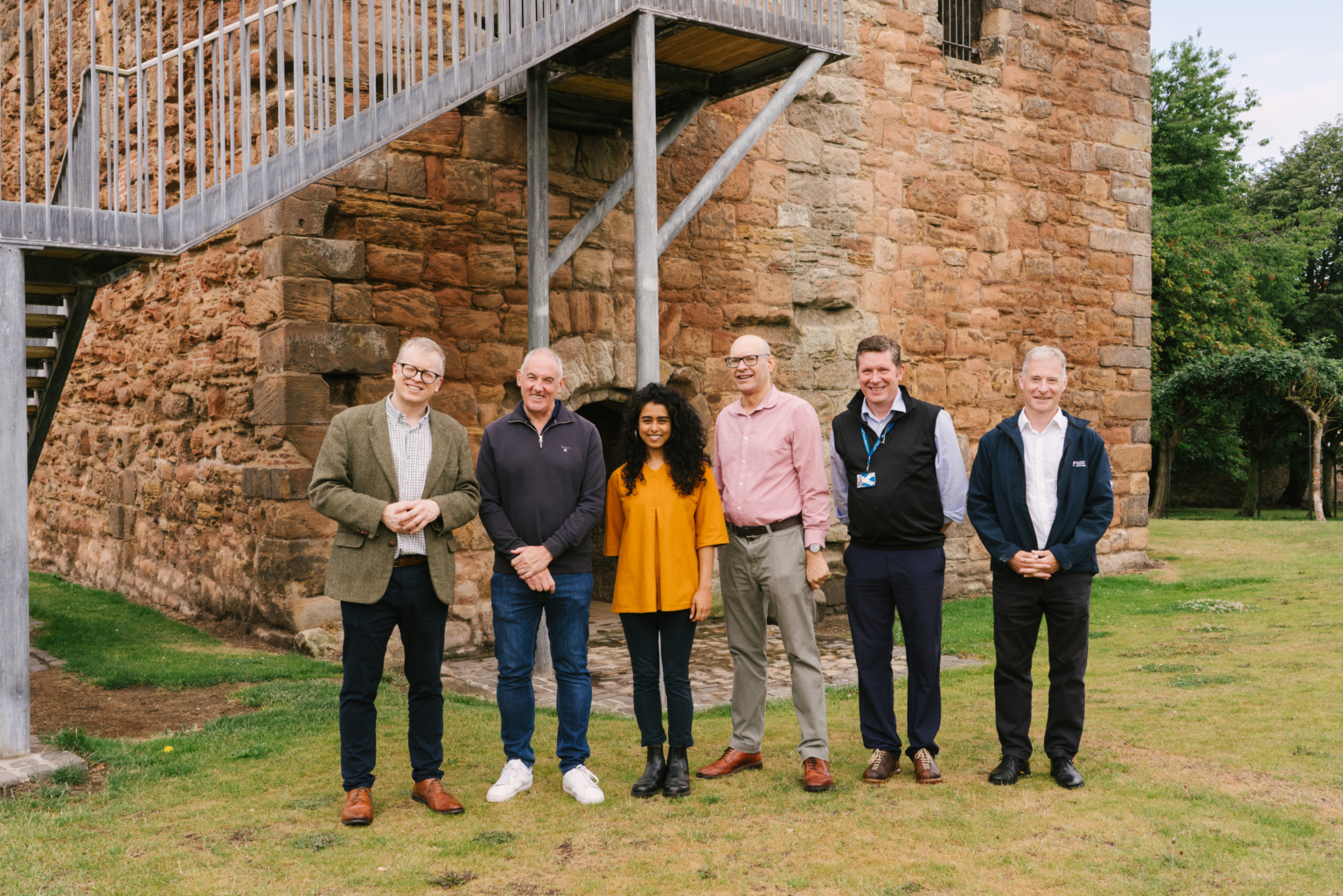
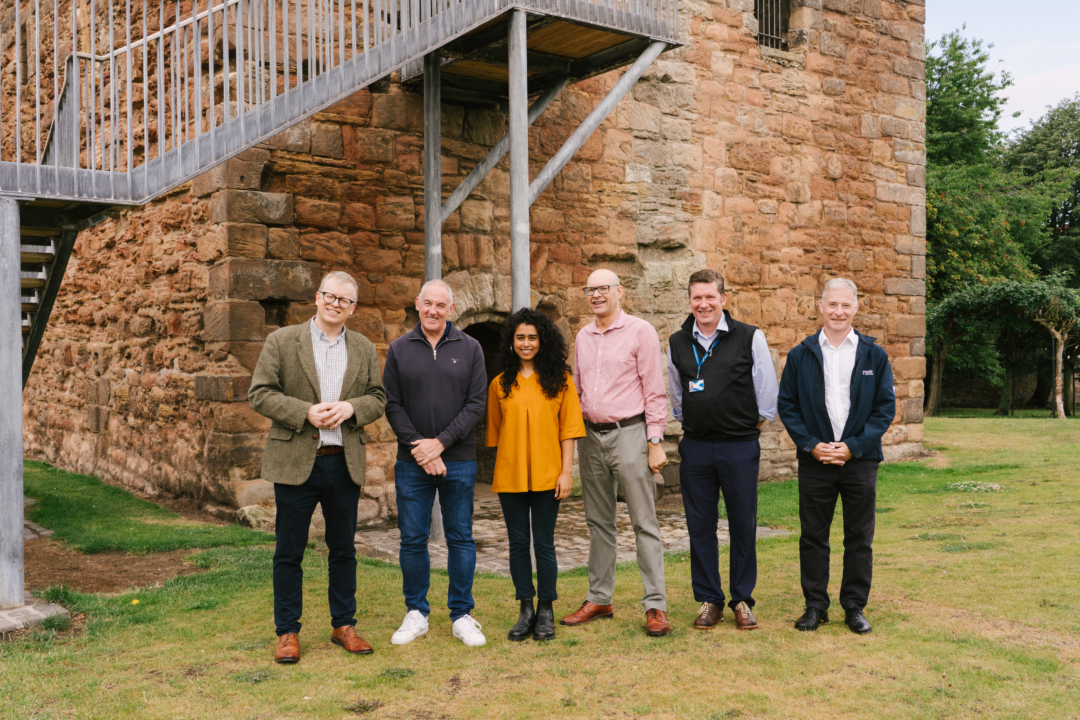
Paul McLennan MSP, whose constituency of East Lothian Coast and Lammermuirs includes Prestonpans, visited Preston Tower on 29 July. The visit was arranged by the RIAS, represented by Joanna Hall and Stuart Hay. Natasha Huq, GRAS associate and conservation architect, led the tour, with Colin Gilmour of East Lothian Council Economic Development, DJ Johnston-Smith of Friends of Preston Tower and Diarmid Hearns of the National Trust for Scotland.
On 10 July 2026 Paul McLennan lodged a motion in the Scottish Parliament recognising the project’s care for the historic environment and its benefit to the community:
“That the Parliament congratulates all those involved in the Preston Tower project in East Lothian on receiving a 2026 Royal Incorporation of Architects in Scotland Award for architectural excellence.” Read in full on the Scottish Parliament website.
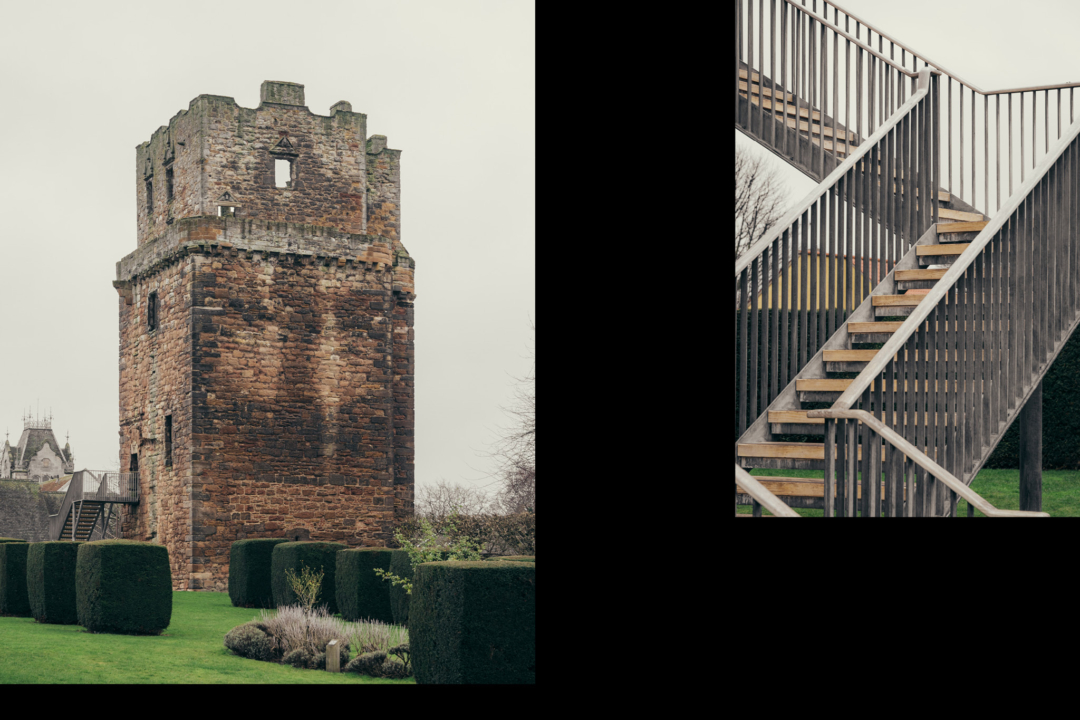
The site comprises a ruinous late 15th century tower house and a 17th century doocot, set within a walled garden. It is owned by the National Trust for Scotland and has been managed by East Lothian Council since 1972. The project was publicly funded, and the brief developed between the owners, the management organisation and the community: to bring both structures into good repair, improve public access, and provide interpretation of the site.
Work proceeded in two phases. The first comprised repairs to the doocot and boundary walls, together with new accessible paths, landscaping and interpretation. This allowed time for the upskilling of the contractor, for a detailed understanding of the tower to form, and for a relationship with the community to develop. The second comprised consolidation of the tower, further interpretation, and a new external stair providing access to the first floor interior.
Archaeological survey and specialist photogrammetry informed both the technical repairs and the new interventions. Reading the stonework, archaeologists identified the positions of lost timber beams and successive alterations to the original structure. The repair work has become part of the archaeological interpretation of the site.
Budget and a conservation approach required careful prioritisation throughout, including the minimising of future maintenance. Existing stonework was retained wherever possible. New stone was sourced locally and carved to match where necessary, but is intended to be read as new repair. Natasha Huq, Project Lead: ” Rather than a comprehensive refurbishment, this project is a collection of small precise surgical interventions which together make a large impact.”
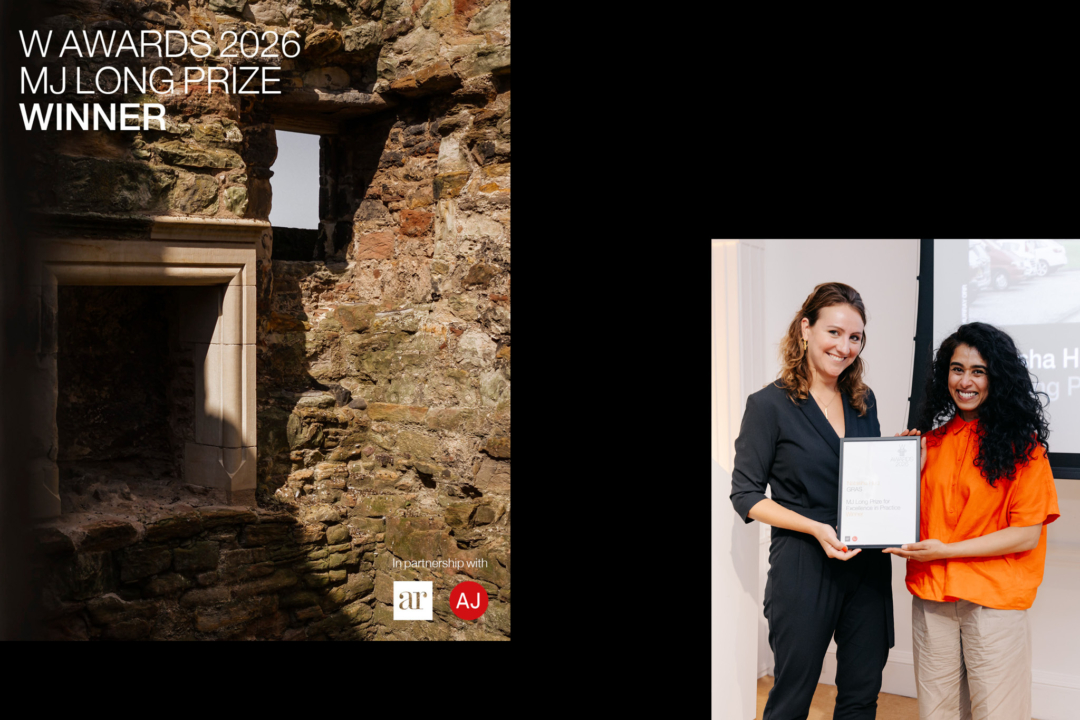
The project received a 2026 RIAS Award, and Natasha Huq the RIAS and Equitone Project Architect Award for her leadership and expertise on the project.
Photography by Cameron Stein