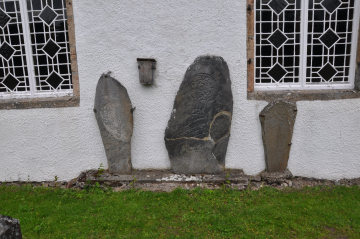


Inveravon Church, located near Ballindalloch in Moray, is home to four Class I incised Pictish symbol stones dating from approximately the sixth century CE. These stones feature some of the earliest known examples of Pictish carving, including multiple representations of the ‘Pictish Beast,’ one of the most recognisable and enigmatic motifs in Pictish art.
Previously mounted into the external face of the church’s south wall, the stones were exposed to the effects of the Highland climate, particularly the damaging freeze-thaw cycle. Their placement also contributed to moisture ingress through the wall, raising concerns for both the stones and the building fabric. In consultation with conservation specialists, a decision was taken to relocate the stones to a more stable internal environment within the church.
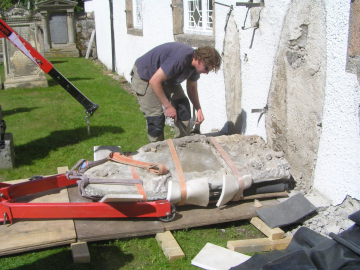
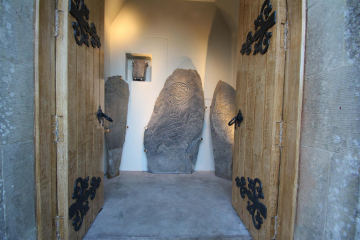
Following careful conservation and documentation, the stones were removed from the external wall and repositioned in the north porch of the church, where they are now protected from environmental stress. New interpretation panels were installed alongside the display, allowing visitors to better understand the cultural and historic significance of the carvings.
This project reflects best practice in the conservation of early carved stones, balancing the need for public access and interpretation with long-term preservation. The relocation safeguards an important part of Scotland’s early medieval heritage within an architectural setting that continues to serve the local community.
- Project Details
- Project Team
Location
Ballindalloch, Scotland
Completed
2012
Type
Conservation