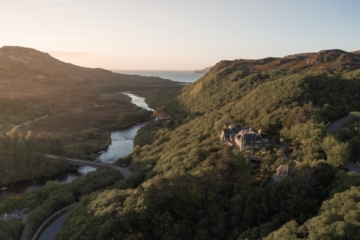
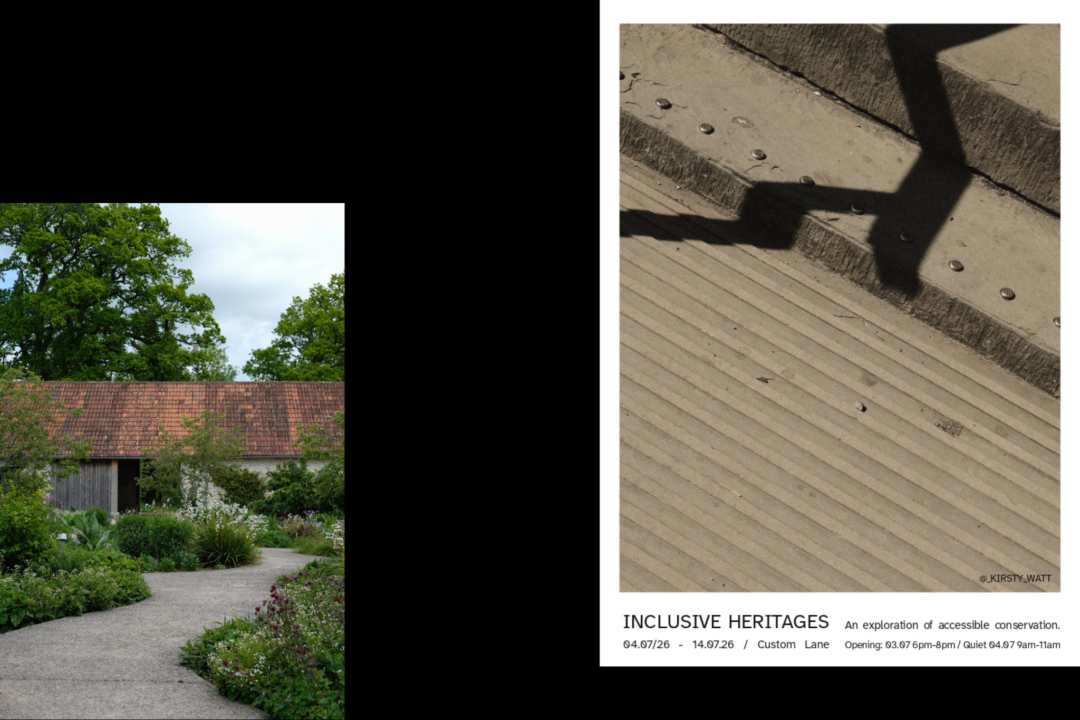
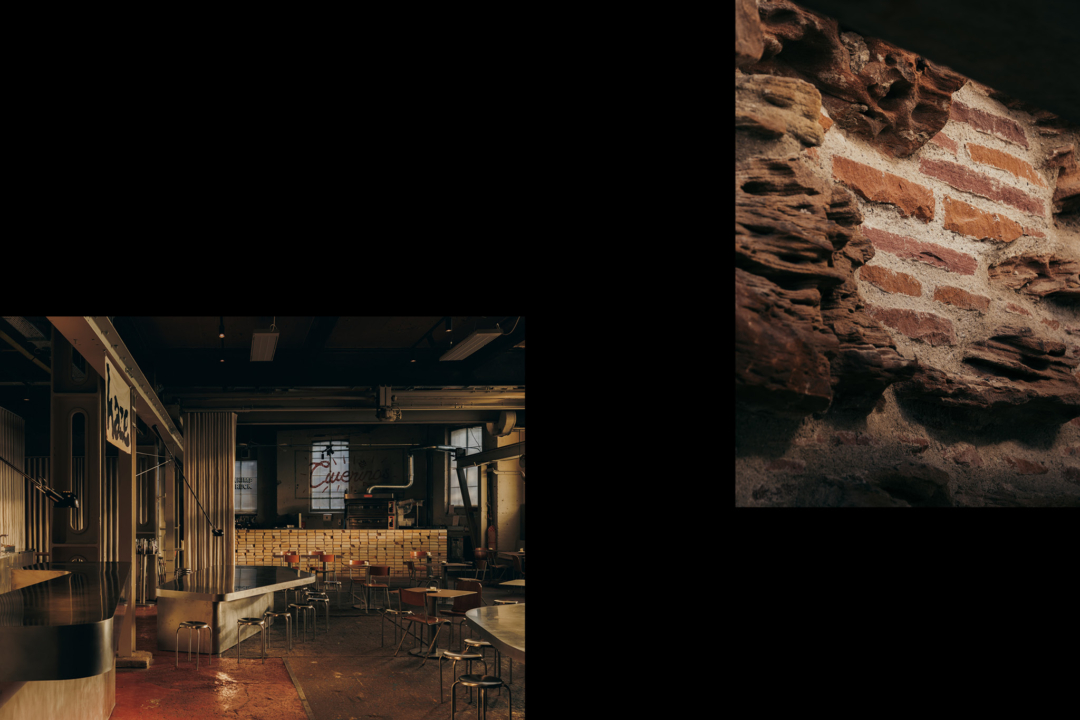
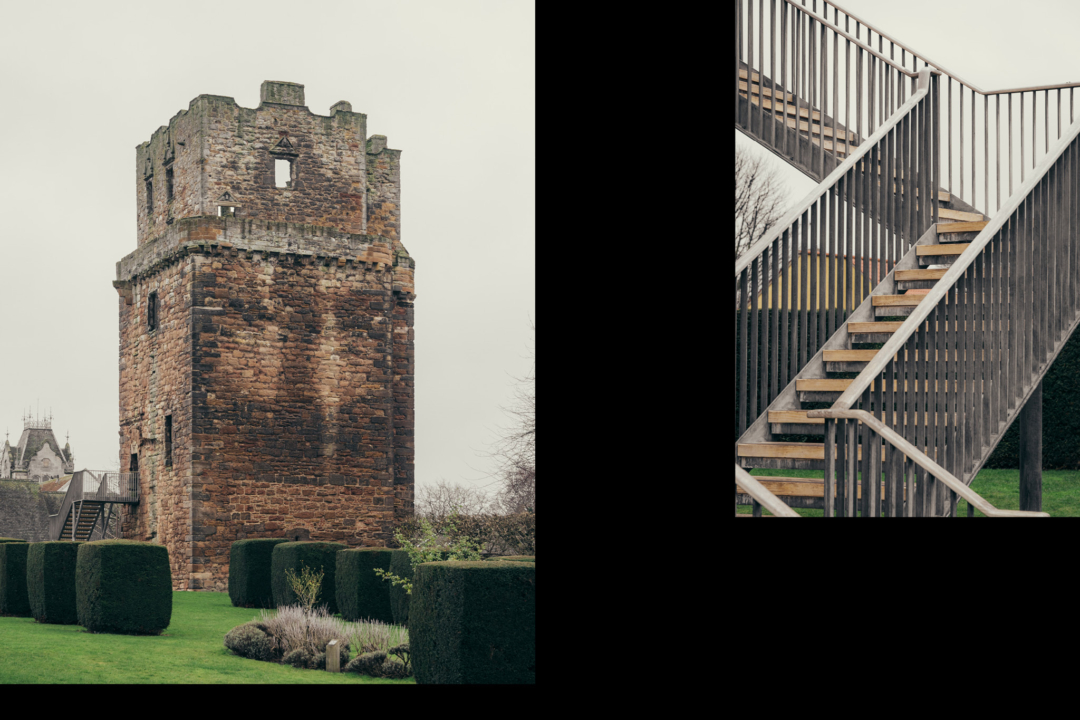
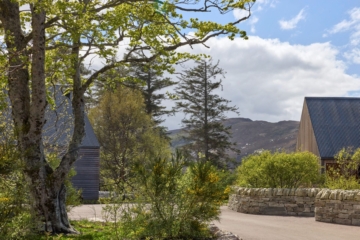
The Clachan is a collection of buildings set within a dramatic and varied landscape, forming a welcoming reception to the wider Hope Estate. Alongside guest-facing spaces, it accommodates the operational and staff facilities that support the estate’s hospitality offering.
The site presented a rich and complex set of conditions: mature woodland, a quarry face, an ancient archaeological mound, a burn, two distinctive birch trees and expansive views across Loch Hope towards Ben Hope. Drawing inspiration from the traditional Scottish clachan, the buildings are arranged informally in response to the landscape, creating a composition shaped by topography, ecology and circumstance. More than a collection of individual structures, the arrangement establishes a sense of community and shared purpose, reflecting Wildland’s ethos of integrating hospitality, land stewardship, food production and craft. Back of house areas receive the same quality and attention to detail, a gesture that reveals WildLand’s respect for its staff and non guests.
Organised around the existing birch trees and anchored against the quarry face, the buildings are set over two levels defined by the site’s natural topography: an upper vehicular level and a lower pedestrian realm. As visitors move through the site, carefully framed views reveal both architecture and landscape, while the spaces between buildings allow the surrounding environment to flow naturally through the development. A cohesive landscape strategy seamlessly connects the Clachan to the wider estate.
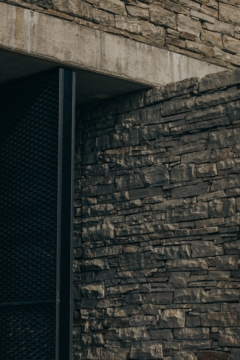
An underground car park is elevated from what might otherwise be a purely functional space into a transcendental architectural experience. Raw in-situ concrete contrasts with dry-stone walls and soft planting, while a generous roof opening introduces natural ventilation and dramatic daylight deep into the structure. Stone stairways with bronze balustrades guide visitors back to the Clachan above, creating a distinctive arrival sequence and first encounter with the Hope Estate.
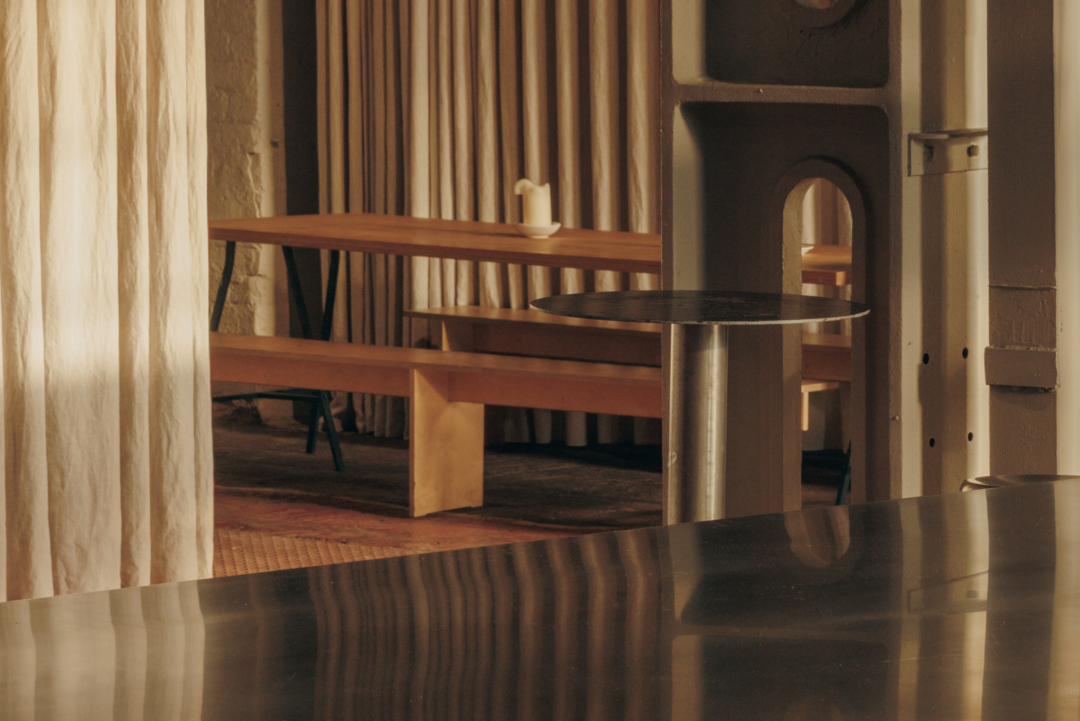
From the outset, GRAS undertook an extensive study of the region’s vernacular architecture, cataloguing materials, forms and details found throughout the landscape, from rural timber barns to traditional stone steadings. The resulting material palette celebrates local craftsmanship through the use of stone from a nearby quarry, Scottish timber, board-marked concrete and patinated corrugated copper roofing that settles naturally into its surroundings.
More via wildland.scot
- Project Details
- Project Team
Location
Sutherland, Scotland
Client
WildLand
Completed
2026
Size/Area
1400m²
Type
Commercial
Concept & Interior Design
Cecile & Boyd
GRAS
Gunnar Groves-Raines
Matthew Fan
Kirsty Watt
Garden Design
Tom Stuart-Smith